Everything you actually need for an RV or campervan trip through the Sea to Sky corridor — written for renters and first-timers, from someone who’s lived it.
Packing for an RV trip feels like it should be simple. You’ve got a kitchen, a bedroom, and a bathroom on wheels — how different can it be from home? Quite a bit different, as it turns out.
I spent over a year living and road-tripping in my RV, Thora the Explorer, through the Sea to Sky corridor between Vancouver, Squamish, Whistler and Pemberton. And the list below is everything I learned, often the slightly-hard way.
This is built specifically for people renting an RV or campervan for a summer trip through BC — not a generic camping list, and definitely not a list of things you’d need for tent camping. If you’re heading to the Sea to Sky for a road trip with family or friends, planning to hike, swim in some lakes, explore the towns, and actually relax at your campsite in the evenings, this covers you.
First: What Does Your Rental Actually Include?
This is the question nobody thinks to ask until they’re standing in an empty kitchen at a campsite holding a bag of groceries and no pot to cook them in.
Here’s the honest answer: it depends entirely on your specific host and listing.
On RVezy (which is where I’d point most people renting in BC — browse listings here), most motorhomes come with a fridge, stove, microwave, a bathroom, and sleeping space. But bedding, kitchen gear, and outdoor equipment vary hugely from listing to listing. Some hosts include everything down to a French press and a spice rack. Others hand you the keys and wish you luck.
What to do: Read your listing description carefully before booking. If it’s unclear, message your host directly and ask specifically:
- Is bedding / linen included? (pillows, duvet, sheets)
- Is there cookware, crockery and utensils?
- Are there camp chairs and a table?
- Is there a BBQ or outdoor cooking setup?
Many hosts offer these as add-ons for a small fee at booking — it’s absolutely worth adding a linen kit and kitchen pack if you’re not sure, rather than discovering the gap at 7pm at a campsite.
With that said — here’s what to pack assuming the basics are sorted and you’re filling in the rest.
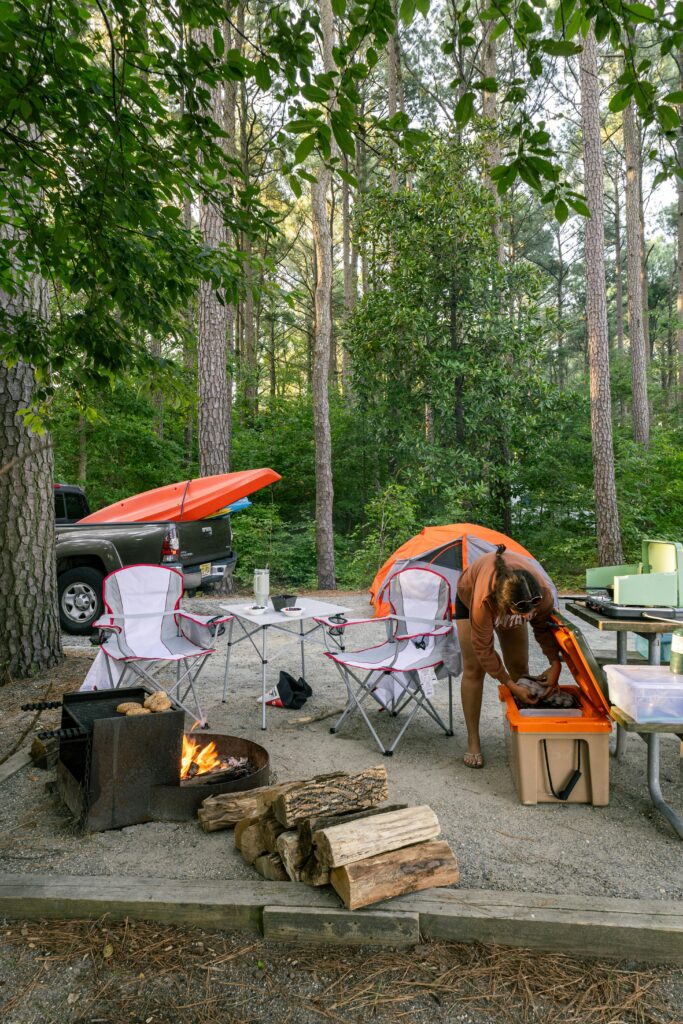
Bedding & Sleeping
Even if your rental includes beds, you’ll often need to bring your own linen unless you’ve confirmed it’s included or added a linen kit.
- Fitted sheets and a pillowcase per person — check your bed size in the listing (often queen or double)
- Duvet or sleeping bag — even in summer, Sea to Sky nights get cold. Whistler and Pemberton can dip below 10°C after dark even in July
- Extra blanket or fleece throw — for the sofa, for cold mornings, for sitting outside in the evening
- Your own pillow — you’ll thank yourself
- Blackout eye mask or curtains — BC summer means light until 9:30–10pm. If you want to sleep before that, you need either window covers or an eye mask
- Earplugs — some campgrounds are quieter than others, bring these for the ones that are not!
Kitchen & Cooking
Cooking in your RV is one of the best parts of the trip — it’s where you save money and slow down. But again, confirm what your rental includes before assuming.
If kitchen gear isn’t included, you’ll need:
- A medium saucepan and a frying pan
- A sharp knife, cutting board, and basic utensils (spatula, wooden spoon, tongs, ladle)
- Plates, bowls, mugs, and glasses (reusable — not paper)
- A can opener and a corkscrew
- A colander
Whether included or not, bring:
- A French press or travel coffee maker — this is non-negotiable if you’re a coffee person. The built-in coffee setup in rentals is rarely good. My favourite for RV travel is the AeroPress — it’s small, minimal clean up and travels really well.
- A small cooler — your RV fridge is great for the campsite, but you’ll want a portable cooler for day trips to the lake or trailheads
- Reusable water bottles — at least 2L per person for hiking days
- Airtight food containers and ziplock bags — you’re in active bear country. Don’t leave food out or in unsecured places, including inside your vehicle if bears are present
- Dish soap, a sponge, and a small basin for washing up
- Paper towels, tin foil, and garbage bags
- A small spice kit — salt, pepper, olive oil, and whatever you cook with. Most rentals don’t include these
One critical note: Always check current fire bans before cooking. In BC summers, fire restrictions can affect gas camp stoves at certain restriction levels. Check BC Wildfire Service before you leave and when you arrive at each stop.
Pro tip on groceries: Stock up in Squamish before heading to Whistler. The price difference on food, drink, and supplies is significant — we’re talking noticeably more expensive, not just slightly. Do your big shop before you head up the corridor.
Clothing
The Sea to Sky has its own microclimate. Squamish can be warm and sunny while Whistler is overcast and 10 degrees cooler. You’ll be hiking, visiting lakes, walking around town, and sitting outside at campsites in the evenings — so you need layers that can do a bit of everything.
Per person:
- T-shirts x 4–5
- Long-sleeve base layer x 2 (merino wool if you have it — it doesn’t smell)
- Fleece or mid-layer jacket — evenings get cool even in peak summer
- Waterproof shell jacket — BC weather changes fast. This isn’t optional
- Casual shorts x 2
- Hiking pants or convertible pants
- Underwear x 7 (one per day, always)
- Wool or synthetic hiking socks x 3–4 pairs — cotton socks on hiking days will give you blisters
- Swimsuit — Alice Lake, Brohm Lake, Nairn Falls — you will want to swim
- Beanie and light gloves — honestly, even in July. Cold mornings at campsite are real
- Pyjamas or warm lounge wear for evenings in the RV
Footwear:
- Hiking boots (broken in before the trip — please, learn from everyone’s mistakes)
- Camp sandals or flip flops — essential for wearing around the campsite, to the campground bathroom, and for casual walks
- Trainers or comfortable walking shoes — for walking around Squamish or Whistler town, visiting a café, going to the farmers market. You don’t want to be in hiking boots all day every day
Outdoor & Day Trip Gear
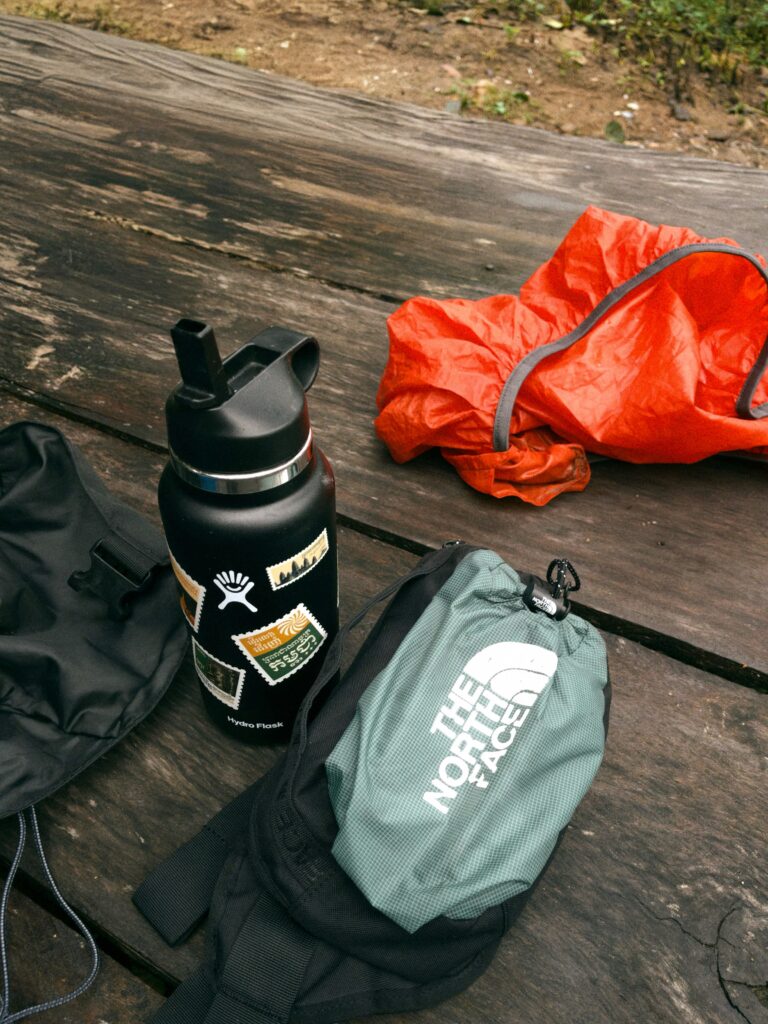
This is where people who pack for tent camping often under-pack, and where people renting an RV for the first time often forget things entirely.
- A daypack / small backpack (20–30L) — absolutely essential. You’ll use this every single day: for hikes, for a trip to the lake, for walking around Whistler village, for carrying snacks and water when you’re out from the RV. Don’t leave home without one
- Bear spray + holster — non-negotiable in Sea to Sky. Bears are active throughout summer. Carry it where you can reach it immediately — not at the bottom of your bag
- Quick-dry towels (at least 2 per person) — for swimming at lakes, for the campground shower, for hiking on hot days. Microfibre towels pack tiny and dry in 20 minutes
- Sunscreen SPF 50+ — UV is more intense at altitude. Reapply often
- Insect repellent — mosquitoes peak in June and July, especially near lakes and rivers
- Hiking poles (optional, but worth it for steeper trails in the area)
- Headlamp — more useful than a torch, and genuinely handy even in summer evenings
- Binoculars — for wildlife spotting along the corridor. You’ll see eagles, bears from a distance, mountain goats — it’s worth having
- Reusable bags — for grocery runs, beach days, and carrying things to the lake
- A small dry bag — useful for kayaking, lake days, or just keeping your phone dry in unpredictable weather
Apps to download before you leave (offline is key — cell signal on Hwy 99 is patchy):
- AllTrails or Gaia GPS with maps saved offline
- BC Parks reservations app
- Google Maps area downloaded for offline use
- iOverlander (for finding overnight spots and dump stations)
Campsite Comfort
This is the category that separates a good trip from a great one. The RV handles the shelter — these are the things that make your outdoor space feel like home.
- Camp chairs — one per person. Check if your rental includes these; if not, they’re worth buying or borrowing. You will spend a lot of time sitting outside
- A small camp table — useful for eating, playing cards, putting drinks on
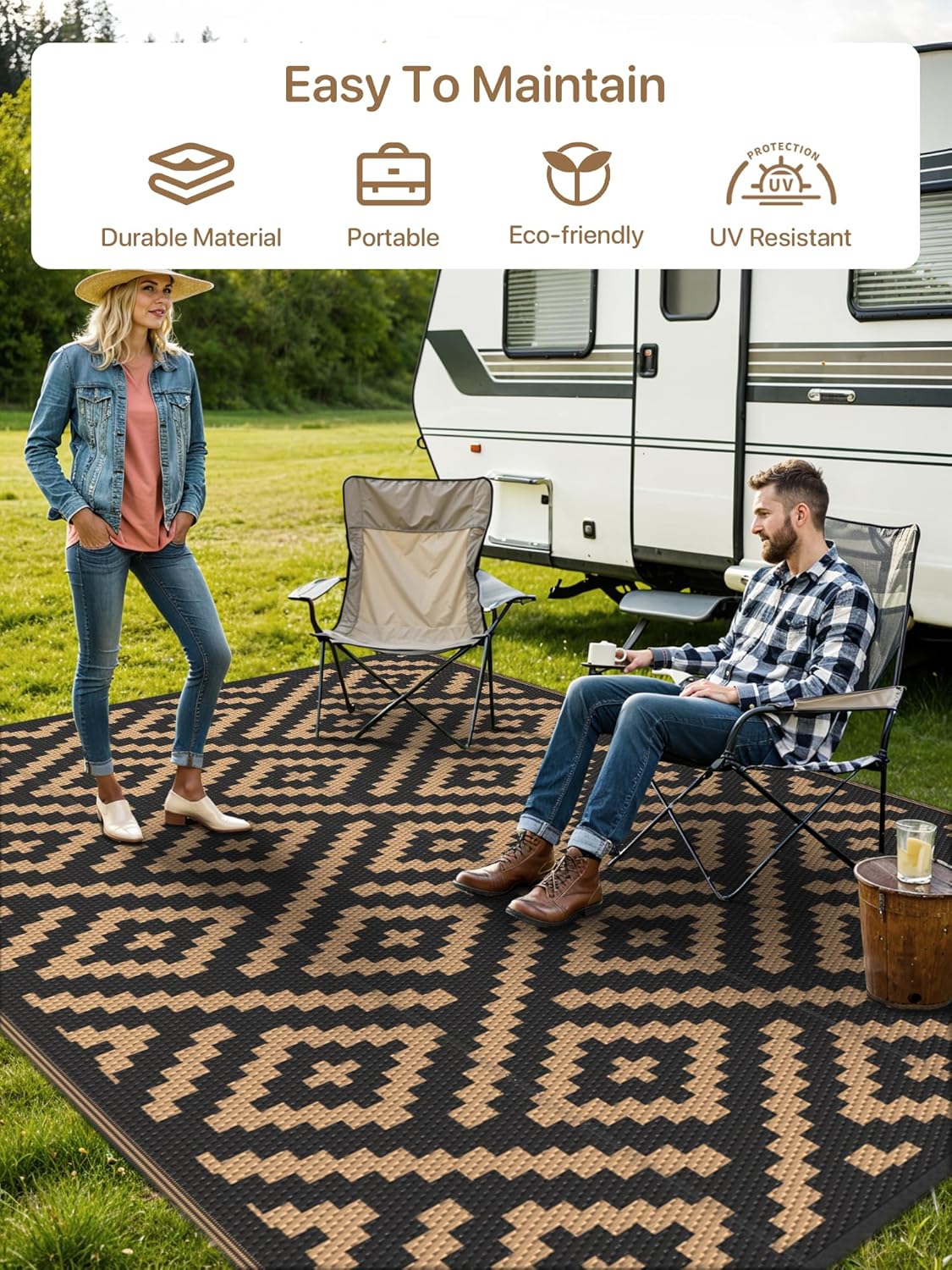
- Outdoor rug or mat for outside the RV door — keeps mud and dirt out of the RV and makes the space feel cosy
- A string of LED fairy lights or a lantern — the difference between a nice campsite evening and a great one. Sounds small, makes a big difference
- Camp games — a frisbee, a football, a set of bocce balls, or a packable card/board game. Evenings at the campsite go from 8pm to bedtime and they’re some of the best moments of the trip
- Kindling and firestarter (or buy firewood at the campsite — many sell it on-site) — check fire bans first
- A good playlist and a Bluetooth speaker — again, be a considerate neighbour at busy campgrounds
Toiletries & Personal Care
- Biodegradable soap and shampoo — not optional if you’re near rivers or lakes. Dr. Bronner’s and Sea to Summit both make great ones
- Sunscreen (bring more than you think — you’ll use it every day)
- Insect repellent
- Toothbrush, toothpaste, floss
- Deodorant
- RV-safe toilet paper — important if your rental has a toilet (most do). Regular toilet paper can clog RV waste tanks. Ask your host which type to use or buy RV-specific TP. Scott’s Rapid-Dissolving is easy to find at most outdoor or hardware stores
- Hand sanitizer
- A small first aid kit — include ibuprofen, blister pads, antihistamine, antiseptic wipes, and any prescription medications
- Hair ties, hair dryer if needed (check if your RV has an inverter for 110V)
- Any personal medications — stock up before you leave; options get limited in smaller towns
Documents & Admin (Don’t Laugh — These Matter)
- Driver’s licence — and confirm with your host that whoever’s driving is listed on the rental agreement
- Your RVezy booking confirmation — save it offline
- All campground reservation confirmations — BC Parks and private sites book out weeks ahead in July and August. Have everything accessible without cell signal
- Travel insurance documents
- Health cards (BC and out-of-province)
- Cash — some campgrounds, farms, and small businesses are cash only
- A printed or downloaded paper map of the corridor — Hwy 99 has real dead zones between Squamish and Whistler
Tech & Entertainment
- Phone charger and cables (USB-C and Lightning if you have a mix)
- Portable power bank — for hiking days away from the RV
- Camera and spare memory cards — the Sea to Sky corridor is genuinely one of the most photogenic places in Canada. You’ll use it more than you expect
- Adapters if coming from outside Canada (Type B plugs)
- Kindle, books, magazines — for rainy days and slow evenings
- Card games or a small board game — highly recommend
- Bluetooth speaker
A Few Sea to Sky-Specific Things Worth Repeating
Bear spray: I’ll keep saying it. Carry it in a holster on your hip or chest, not in your bag. Know how to use it. BC Parks has guidance on bear safety.
Fire bans change throughout the summer: Don’t assume because it was fine last week it’s fine this week. Check BC Wildfire Service every time you move to a new campsite.
Stock up in Squamish: Groceries, propane, sunscreen, any gear you forgot — get it in Squamish. Whistler prices for basics are noticeably higher.
Download everything offline: Hwy 99 has significant dead zones. Your navigation, campground confirmations, trail maps, and any entertainment should be accessible without data.
Book campgrounds well in advance: This corridor is one of the most popular destinations in BC in summer. July and August sites at Alice Lake, Birkenhead Lake, and Nairn Falls fill weeks ahead of time. Don’t leave it late.
Download the Free Checklist PDF
I turned everything above into a clean, printable PDF checklist — organized by category so you can tick things off as you pack. It’s free.
Download the Sea to Sky Summer RV Packing Checklist
Ready to Book Your RV?
If you haven’t sorted your rental yet, RVezy is where I’d start — it’s the main peer-to-peer RV rental platform in Canada and there are plenty of great rigs available in and around Vancouver for Sea to Sky trips. Browse your dates, check what’s included in each listing, and message the host if anything’s unclear.
And once you’ve got your rental sorted, check out the Sea to Sky RV campground directory to find where you’re staying, and the services listings for dump stations, fresh water, propane, and more along the corridor.
Have a brilliant trip. The Sea to Sky is one of the most stunning road trip routes in the country — you’re going to love it.
Related posts:
Comments